March 30, 2026
Will AI Replace the Professor? Rethinking the Role of Human Educators in Higher Education
Assoc. Prof. Dr. Mohammed N. Abdulrazaq Alshekhly

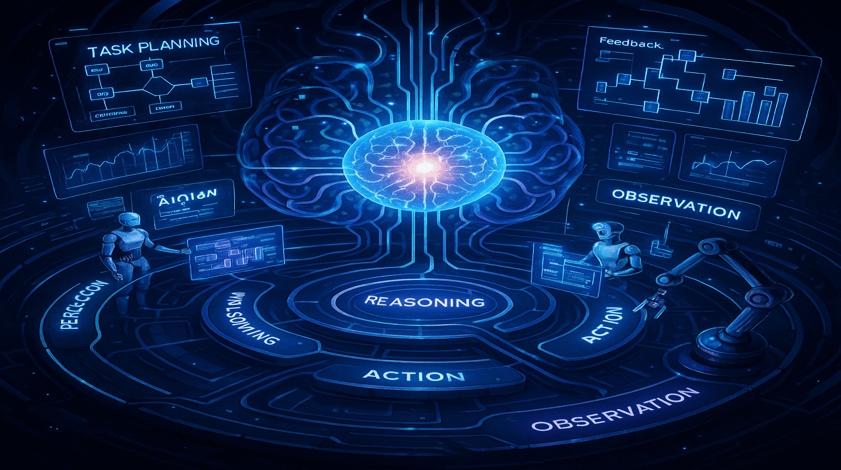
Discover how agentic AI is transforming higher education by enhancing operational efficiency, decision-making, and personalized learning experiences.
Higher education institutions now face greater demands for operational efficiency while providing customized educational experiences which require innovative solutions. The primary function of traditional generative AI systems is to produce content, but agentic AI systems possess the ability to review and make independent choices while engaging with users and virtual environments. The systems provide essential advantages because they can sustain both organizational productivity and human-centered educational services at academic institutions that operate in a dynamic environment.
The implementation of agentic AI through its two functions of process automation and improved decision-making capabilities will decrease the administrative workload faced by faculty and staff members. Organizations that implement agentic AI will achieve enhanced competitiveness and readiness for upcoming challenges.
The best way to implement agentic AI technologies is to start with high-impact, low-risk use cases. Universities can pilot AI systems in their IT helpdesk operations, admissions processes, student onboarding procedures, and course registration functions. The pilot projects enable institutions to assess their capabilities while collecting user feedback to create more effective implementation plans before expanding operations.
The effectiveness of agentic AI depends on three main factors: data quality, data integration, and data governance procedures. The operational performance of AI solutions at universities suffers from their use of separate systems which function throughout both academic and administrative operations. Institutions should focus their resources on data integration, standardization, and governance framework development to achieve maximum operational results.
In higher education, both accuracy and credibility are considered essential. Retrieval-Augmented Generation (RAG) establishes better AI system reliability through its ability to generate content while accessing verified institutional data sources in real time. Through RAG, AI agents obtain access to policies, procedures, academic programs, and institutional knowledge. The system reduces the possibility of incorrect information while producing results that match academic standards and institutional requirements.
The deployment of agentic AI needs effective governance systems, security measures, and ethical standards. Universities must protect sensitive information which makes them responsible for implementing privacy measures, compliance, and risk management practices. Organizations should create comprehensive AI usage guidelines which include responsibility matrix and ongoing performance assessment procedures.
The introduction of agentic AI into Bahrain’s higher education system provides institutions with an opportunity to establish their unique strategic identity. The digital transformation agenda which the country implements requires universities to develop better student services while increasing graduate employability and supporting national imperatives. The implementation of agentic AI enables organizations to achieve their goals through customized learning paths, enhanced efficiency, and improved decision-making based on data analysis.
Agentic AI represents more than a technological advancement; it is an enabler of future-ready universities. With its capabilities in autonomous decision-making, goal-oriented actions, and adaptive interaction, agentic AI extends beyond teaching and learning. It also plays a critical role in strengthening governance and administrative efficiency.
By investing in data quality, implementing strategic use cases, and maintaining human oversight, universities can unlock the full potential of agentic AI while preserving academic integrity. Institutions that embrace this transformation thoughtfully will be better positioned to lead in an increasingly competitive and technology-driven educational landscape.
Dr. Rumpa Roy
Gulf University
Last Updated: 09 Apr 2026